Past Residents
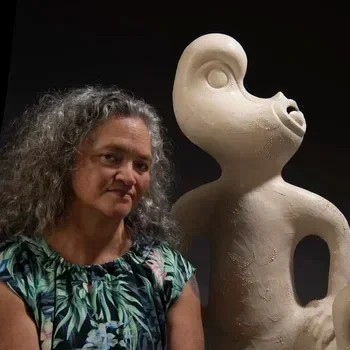
Dorothy waetford
Written by Richard Penn
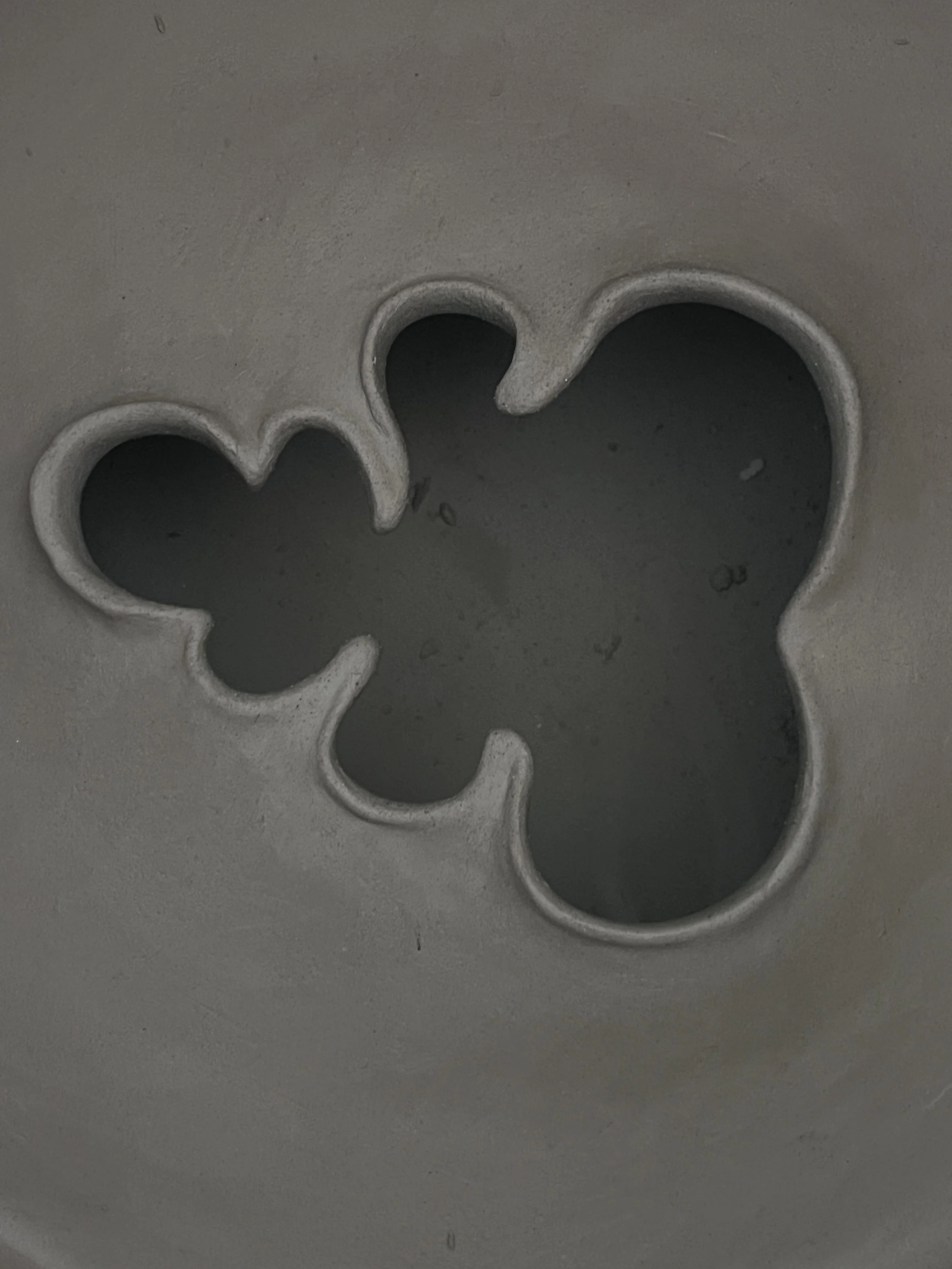
Dorothy Waetford's (Ngātiwai, Ngātihine, Ngāpuhi-nui-tonu) residency at Auckland Studio Potters grew from a specific purpose: to focus on new work for the Kurutai Collective's presentation at the 2026 Aotearoa Art Fair, curated by Chantel Matthews, herself a former resident of ASP. That the residency could contribute to the project felt natural, and ASP was glad to hold space for it.
There is a Māori word Dorothy reaches for when describing her approach to making: tutu - to tinker, to experiment, to meddle with curiosity and a certain irreverence. It is a playful word, but it describes a serious commitment. To tutu is to follow an idea past the point where you know what will happen, to treat the studio as a place of inquiry rather than production. It is, in spirit, exactly what the ASP residency asks of its artists: be curious, take risks, fail if necessary. Dorothy arrived already fluent in that language.
The work she is making draws from the place she lives, Matapouri Bay, where the river meets the sea. That threshold, the estuary where fresh water and salt water fold into one another, is the animating image of the project. Water as a site of encounter, of mingling, of perpetual renewal. The cycle of life it carries is not metaphor so much as observed fact: things begin and end at the water's edge, and begin again.
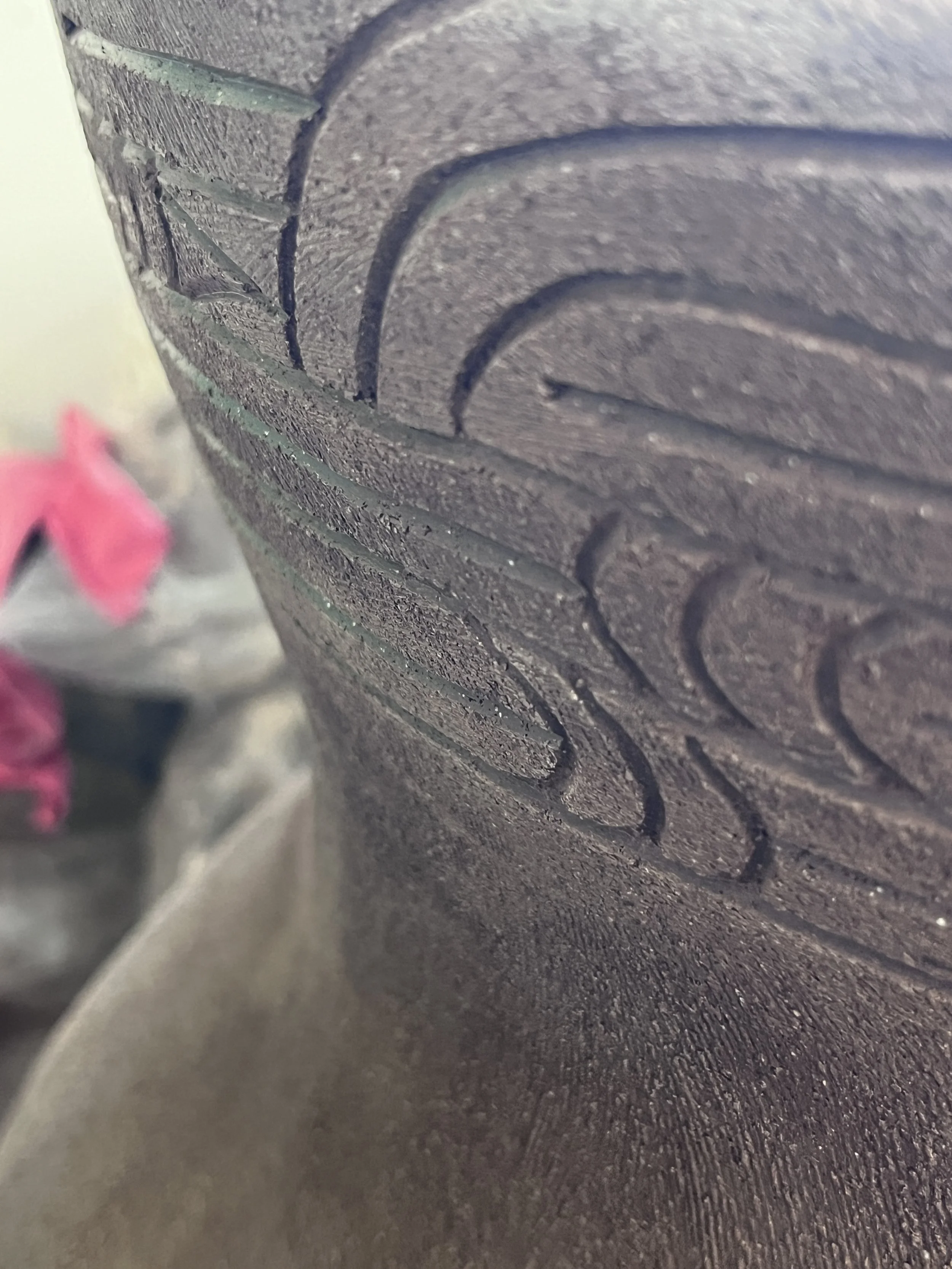
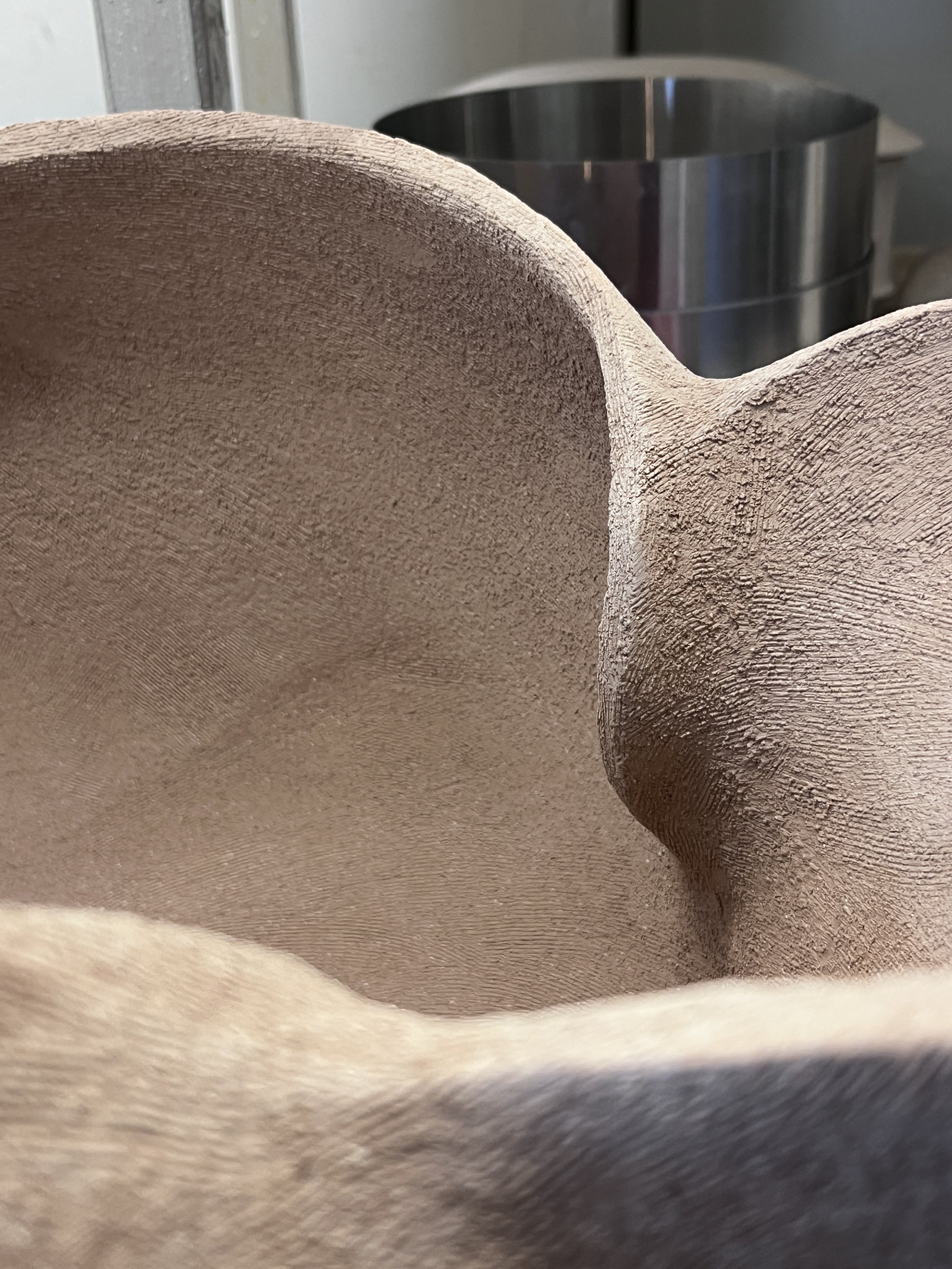
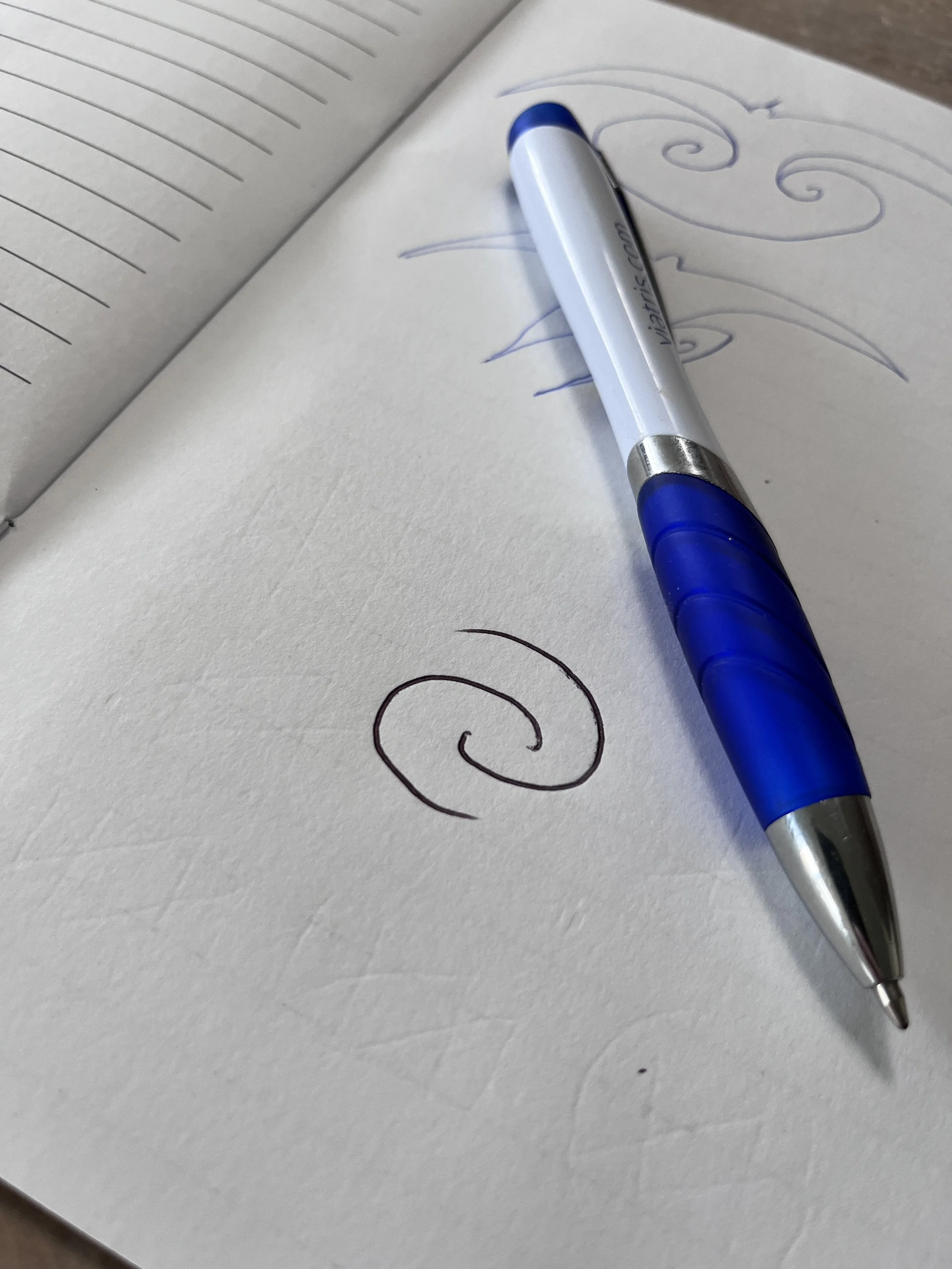
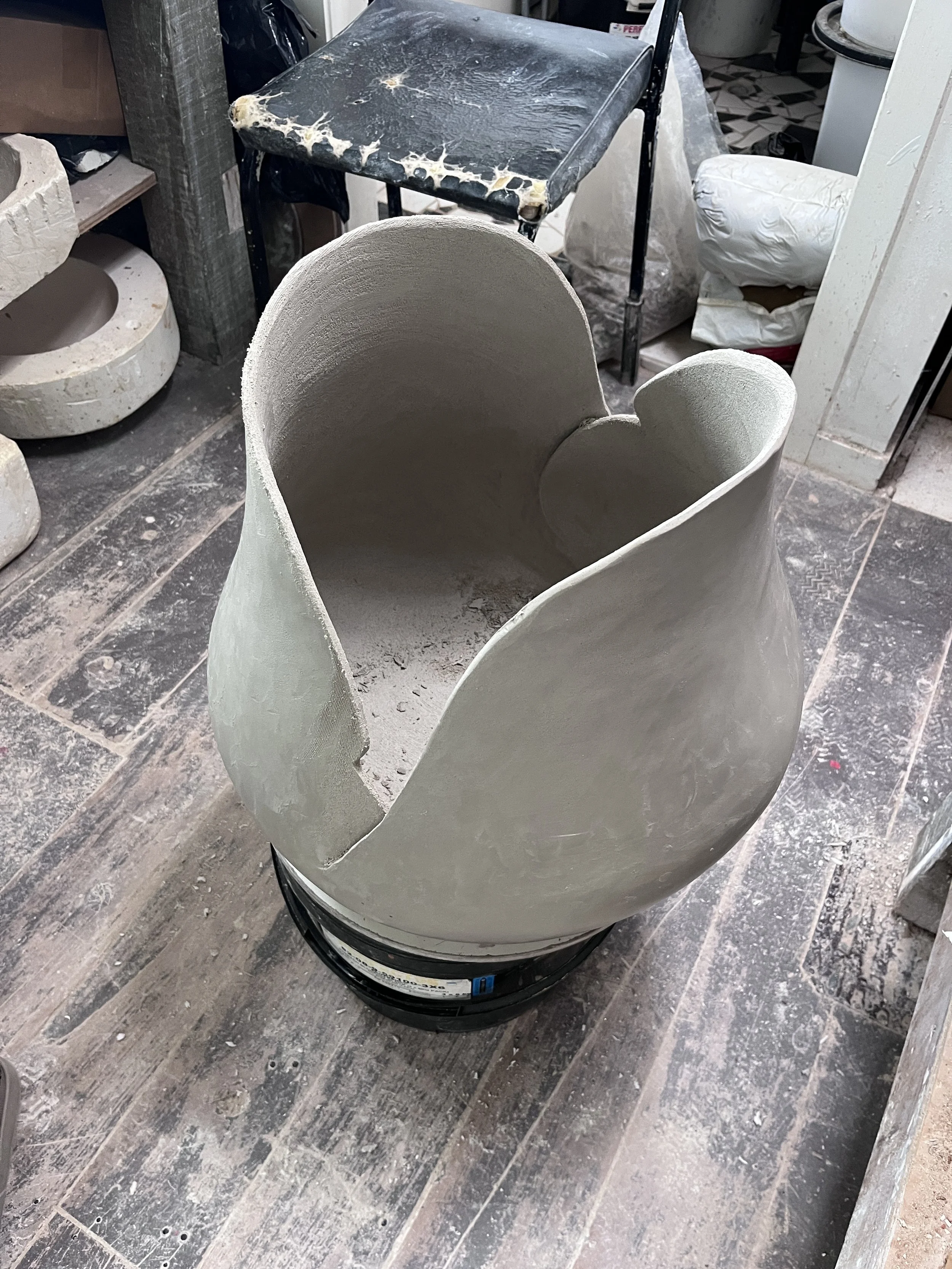
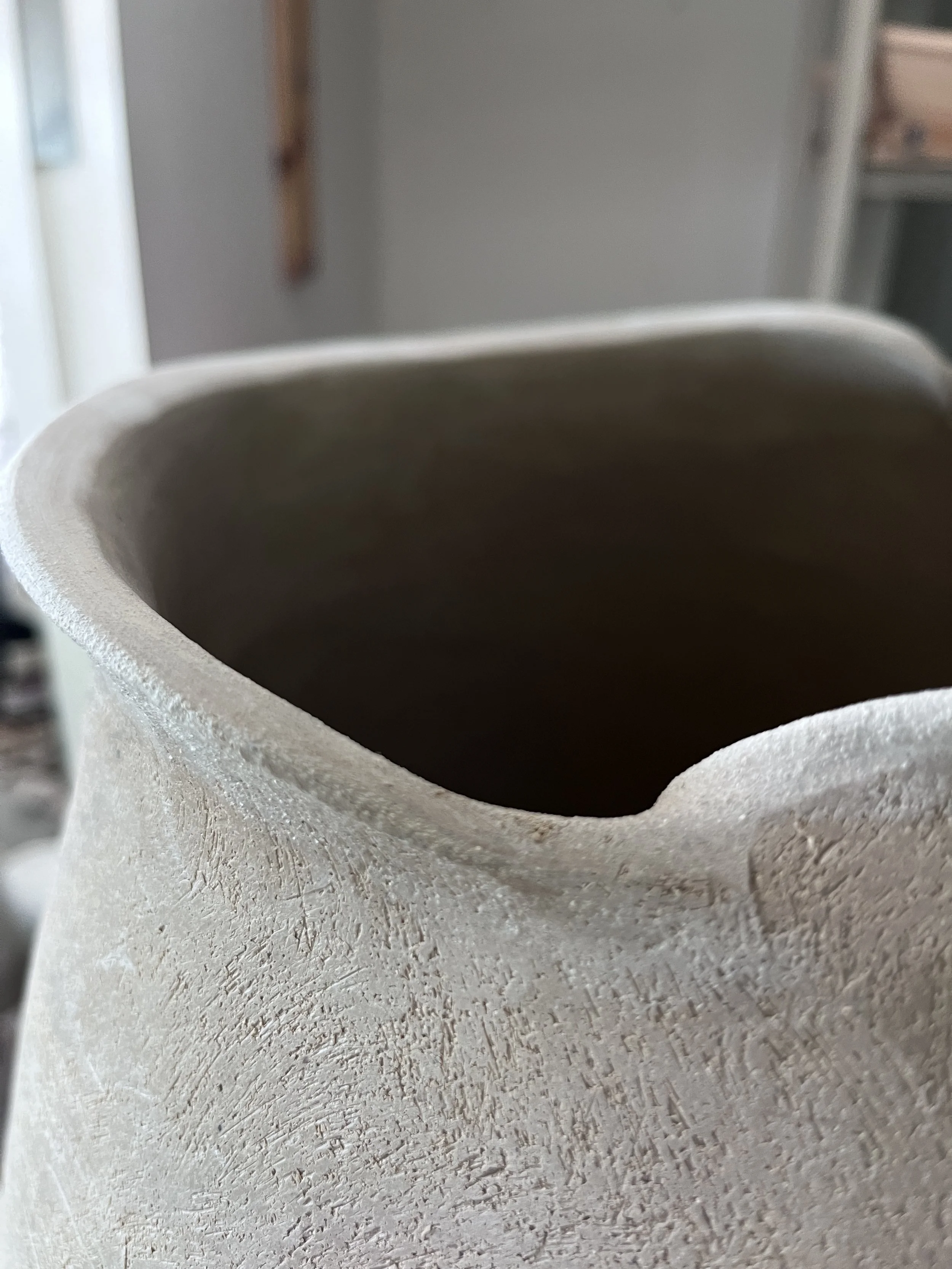
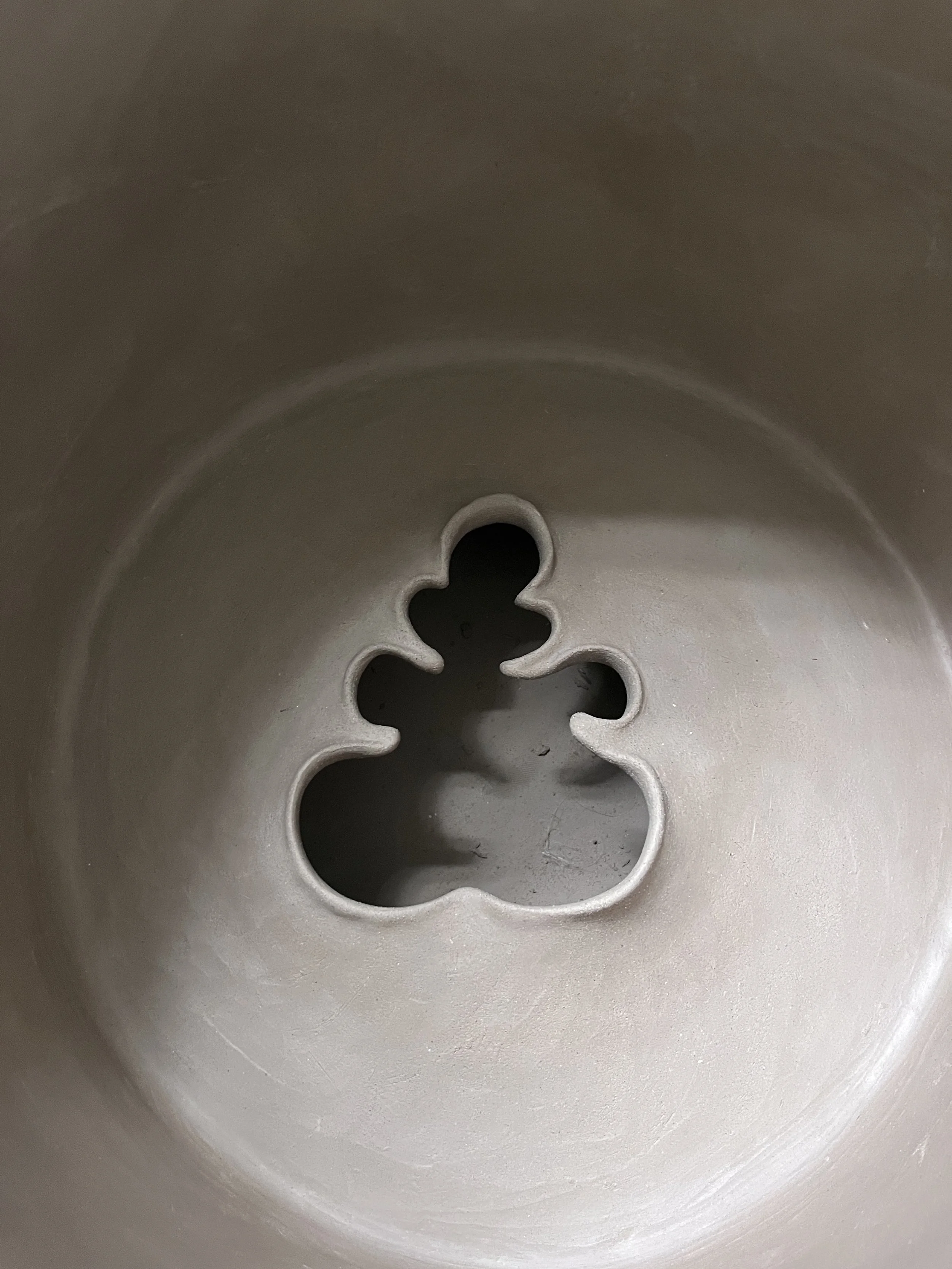
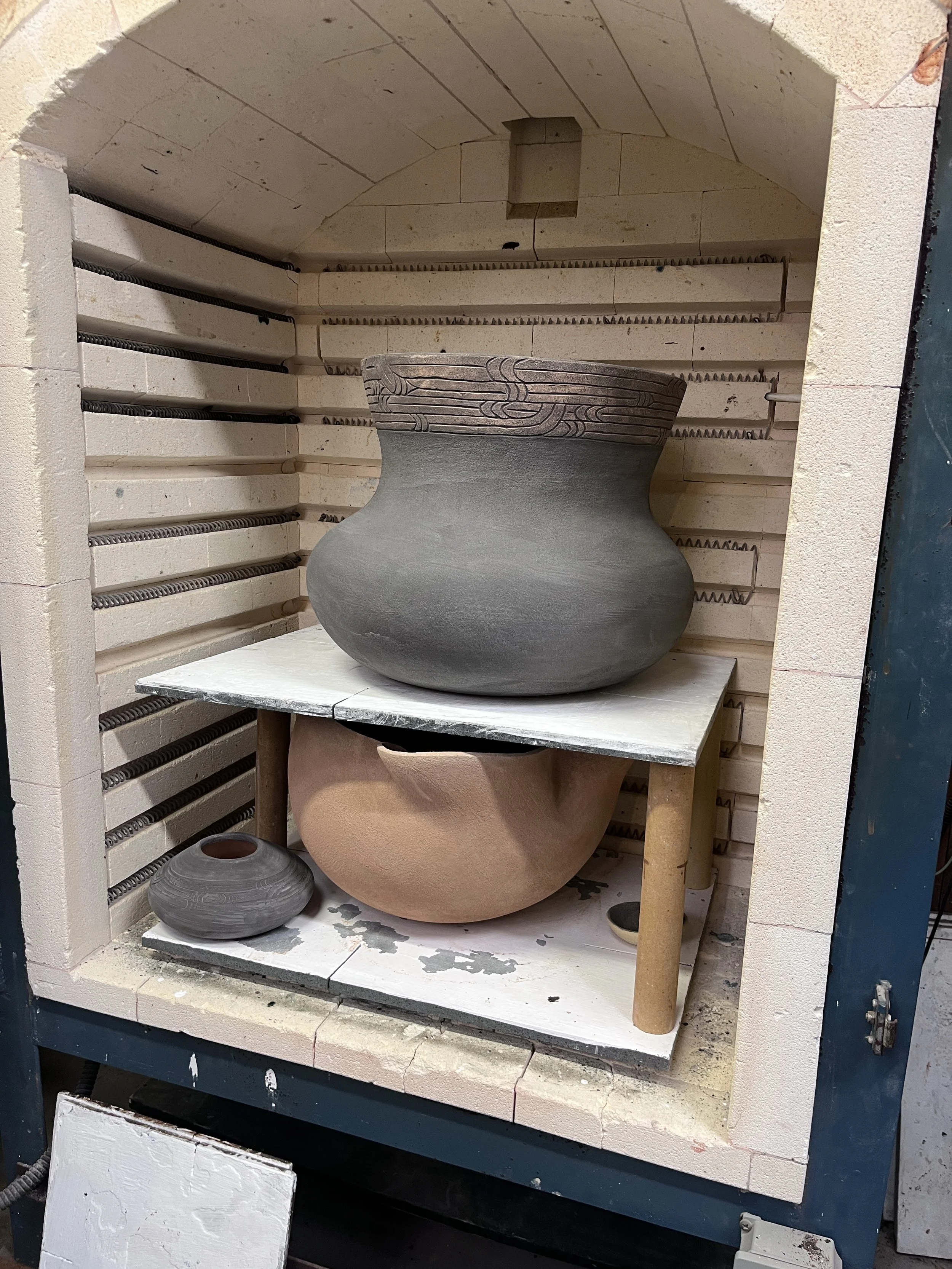
Her vessel forms speak this directly. Conceived as water features, forms that hold, pour, and move, they are also interpretations and variations of the Rauru pattern, a motif derived from the koru that carries the meaning of new life, growth, strength, and peace. Often rendered in two dimensions as connected bulbs and stems, the Rauru pattern in Dorothy's hands becomes something fully dimensional: her vessels feel like bulbs that open into bloom along the lip, enfolding and twisting upward, holding the gesture of growth in fired clay. The spirit of tutu runs through this too, each variation an act of questioning, a willingness to let the form go somewhere unexpected.
The project is collaborative. Dorothy is working alongside Tā Moko artist Graham Tipene (Ngāti Whātua, Ngāti Kahu, Ngāti Hine, Ngāti Hauā, and Ngāti Manu), whose carved patterns meet and respond to her forms. Two distinct practices, vessel and mark, surface and volume, brought into conversation around shared whakapapa and a shared reading of the land and water.
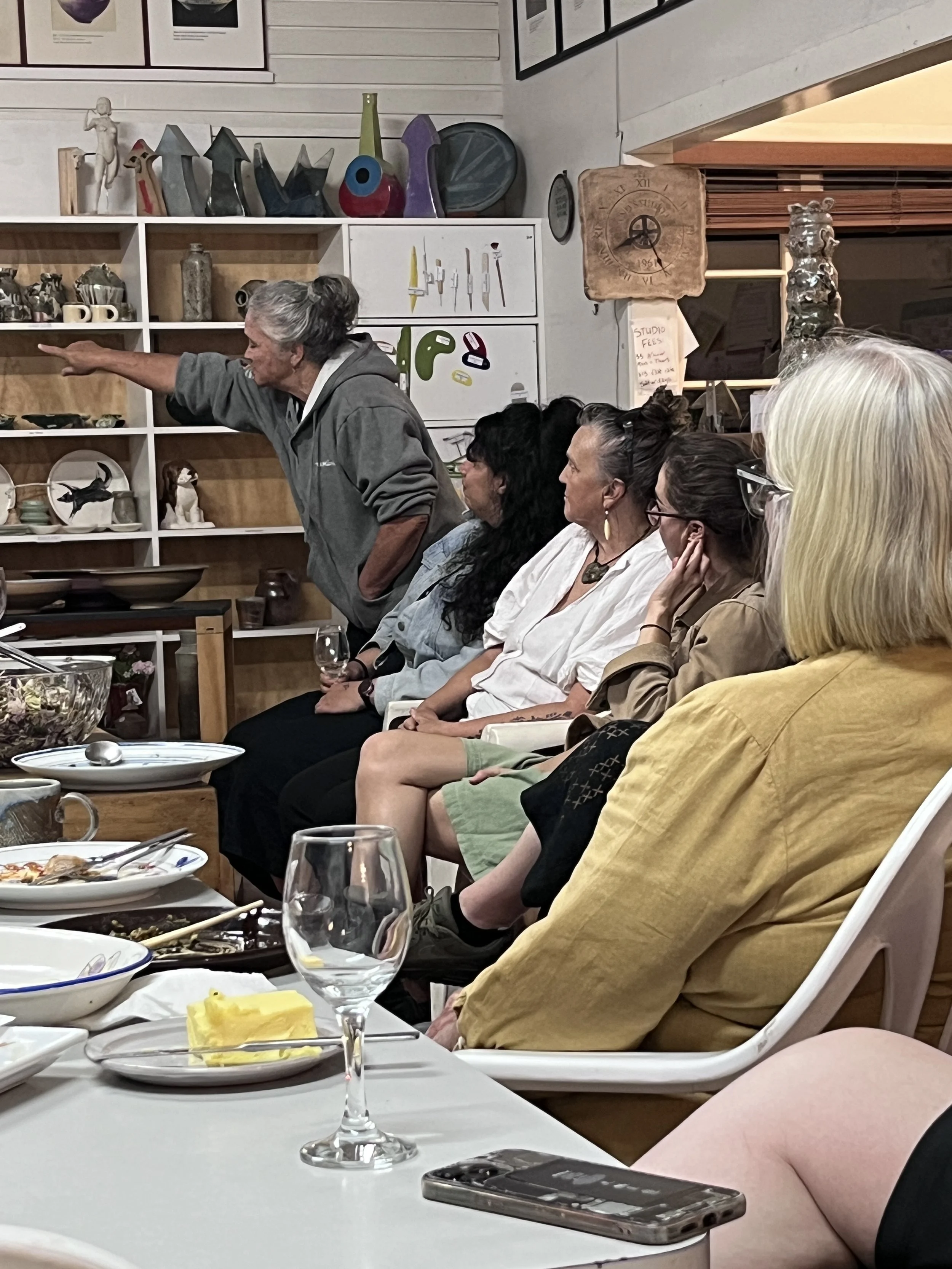
During her residency Dorothy and Chantel hosted an evening at ASP - part sharing, part celebration where they spoke about the project, the process, and what the residency had made possible, alongside a shared pot luck kai. It was an evening in the spirit of the residency itself: open, generous, and grounded in community.
The Kurutai Collective's presentation at the fair brings together ceramics by contemporary Māori artists connected to Ngā Kaihanga Uku, Hineukurangi Collective and Te Ātinga, and sits within the Object sector of the fair alongside ceramics, design, and sculptural works. The fair returns to the Viaduct Events Centre from 30 April to 3 May 2026.
Peter derksen
Written by Richard Penn
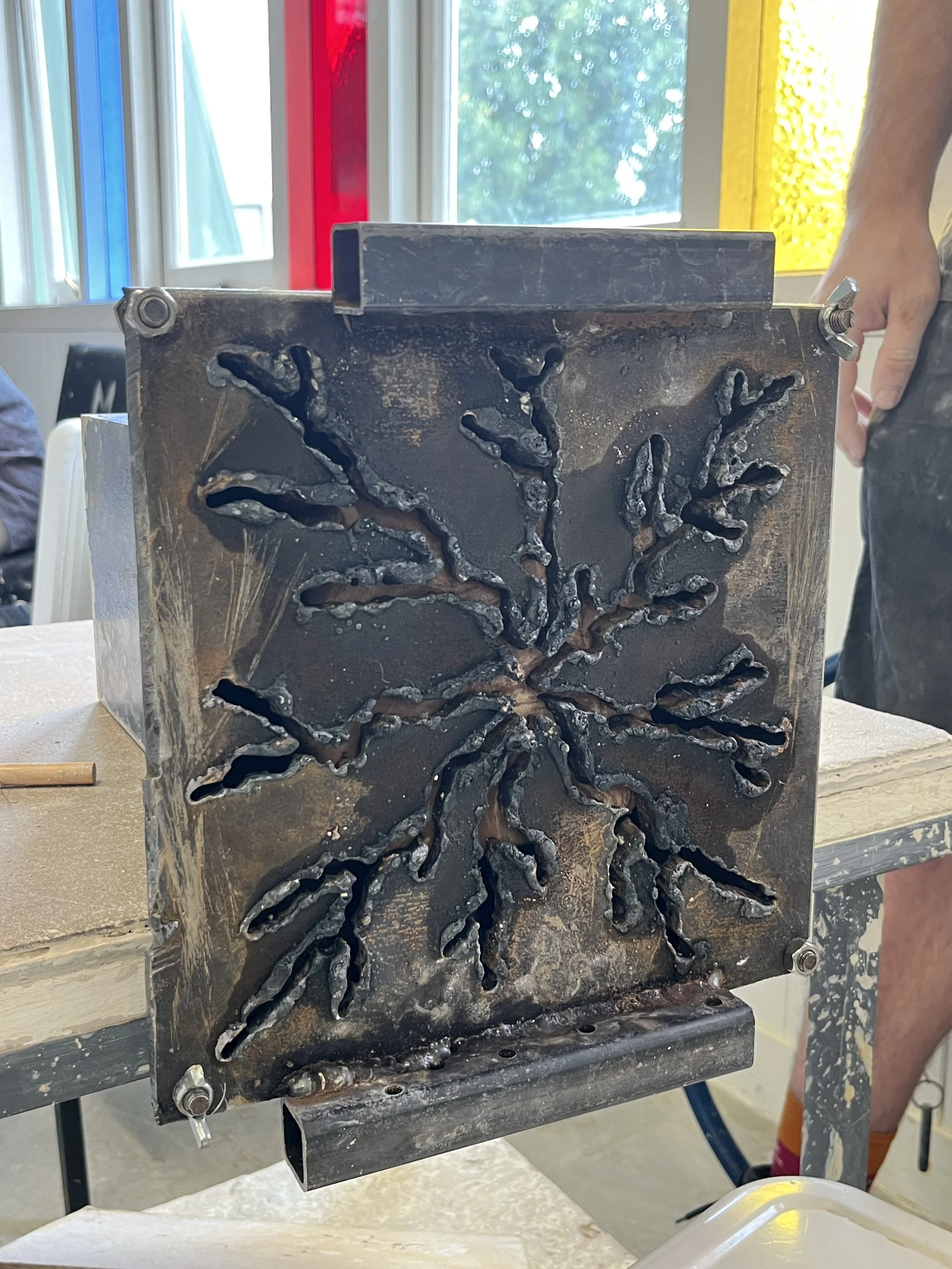
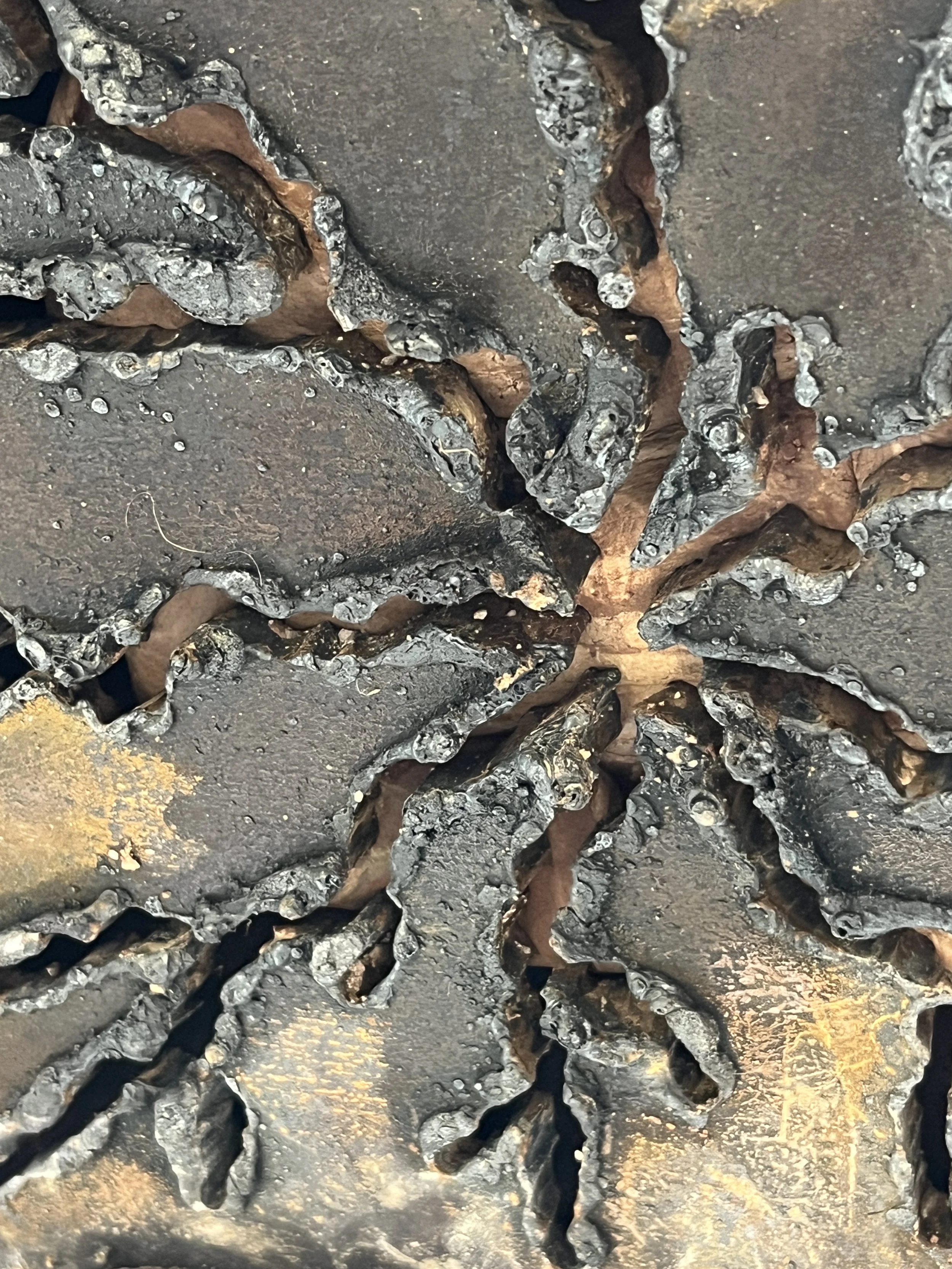
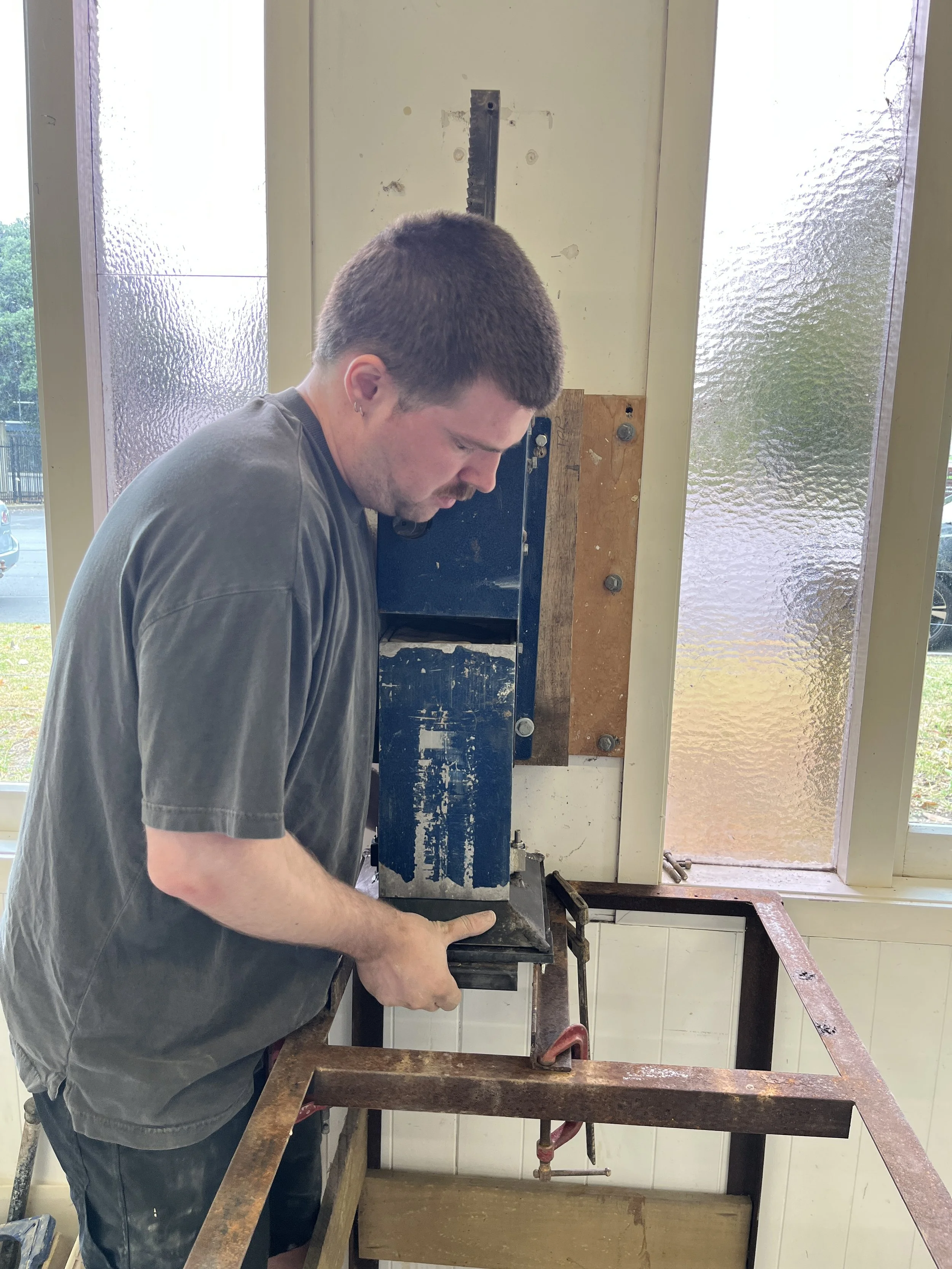
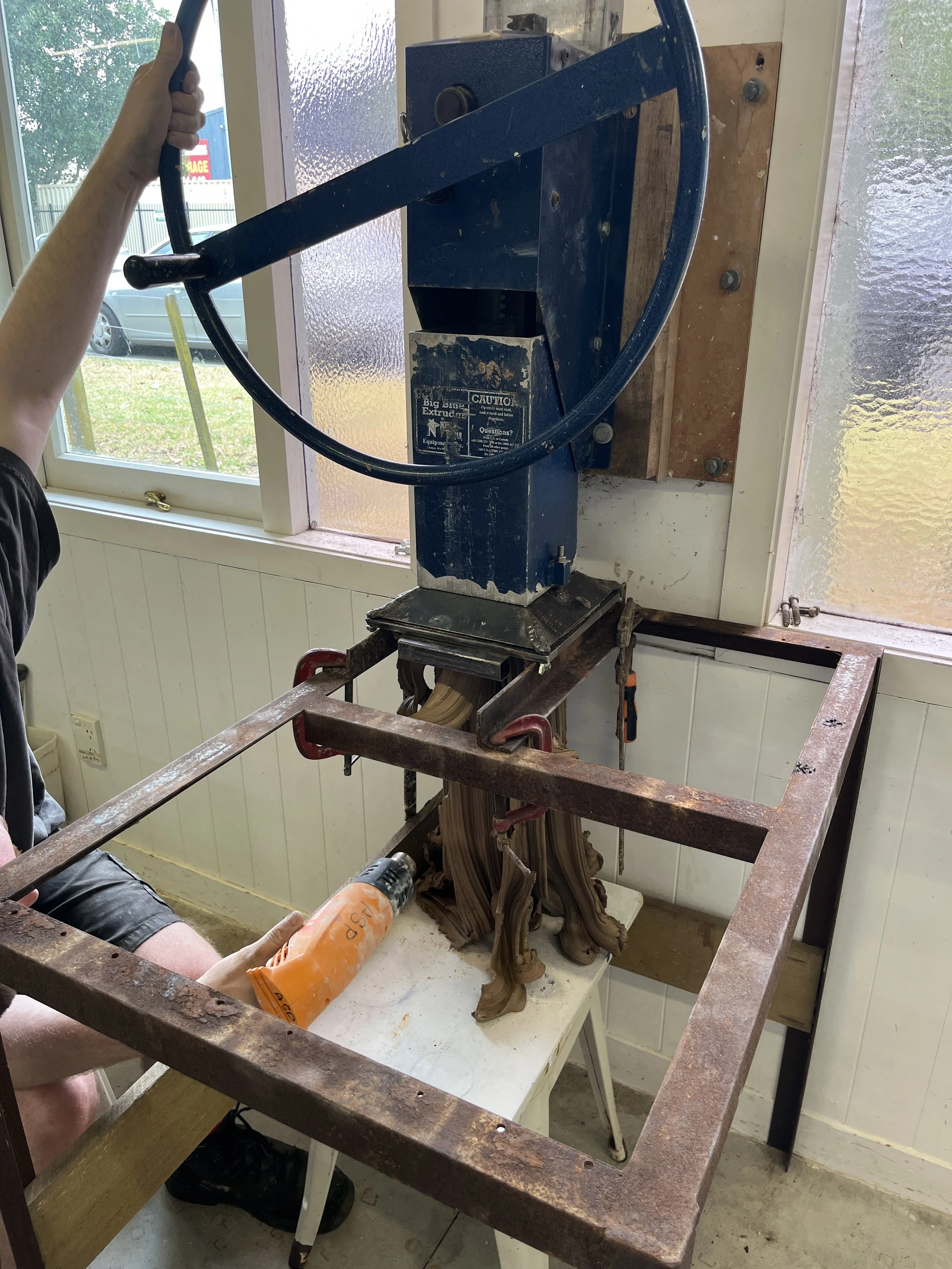
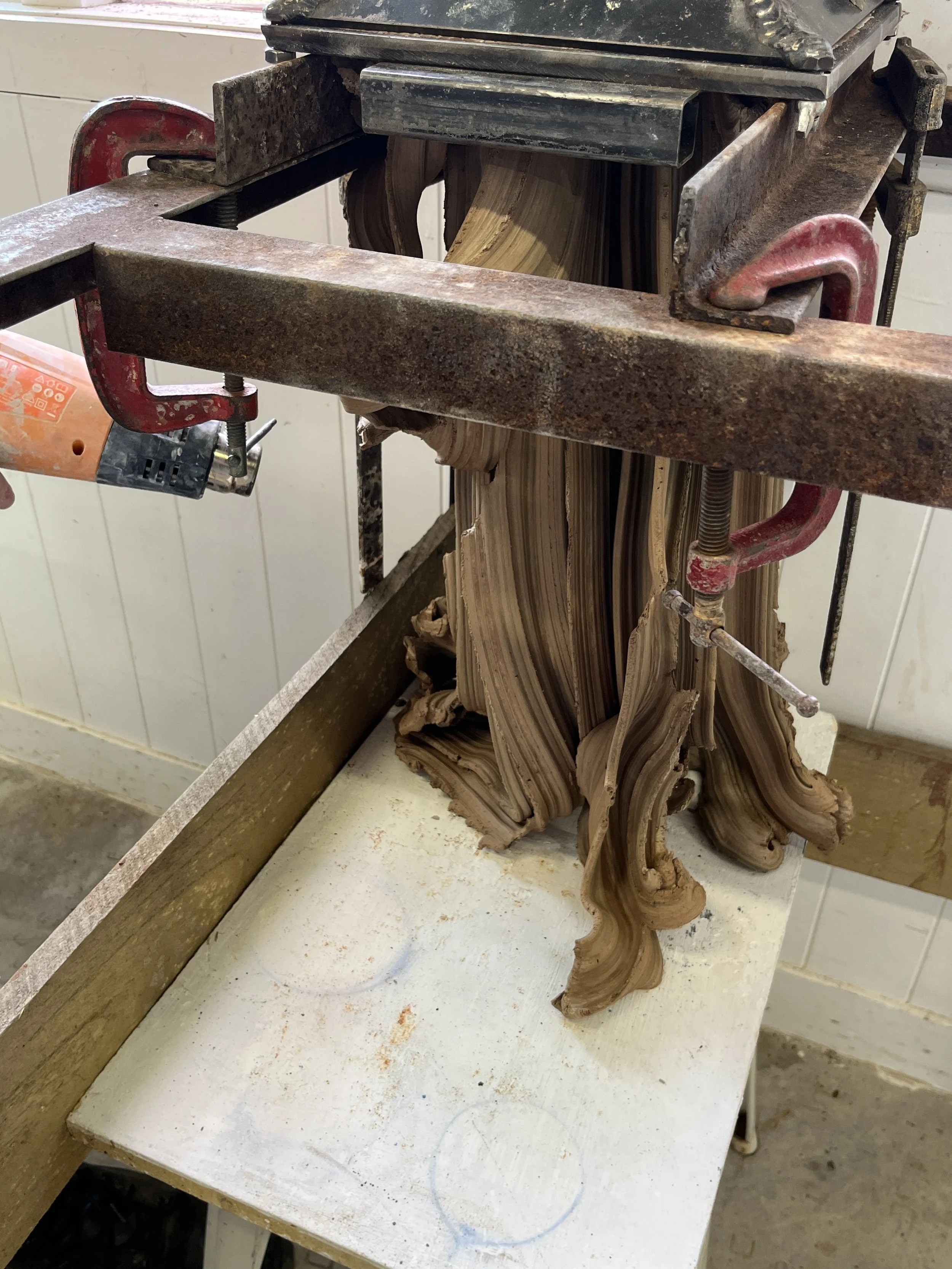
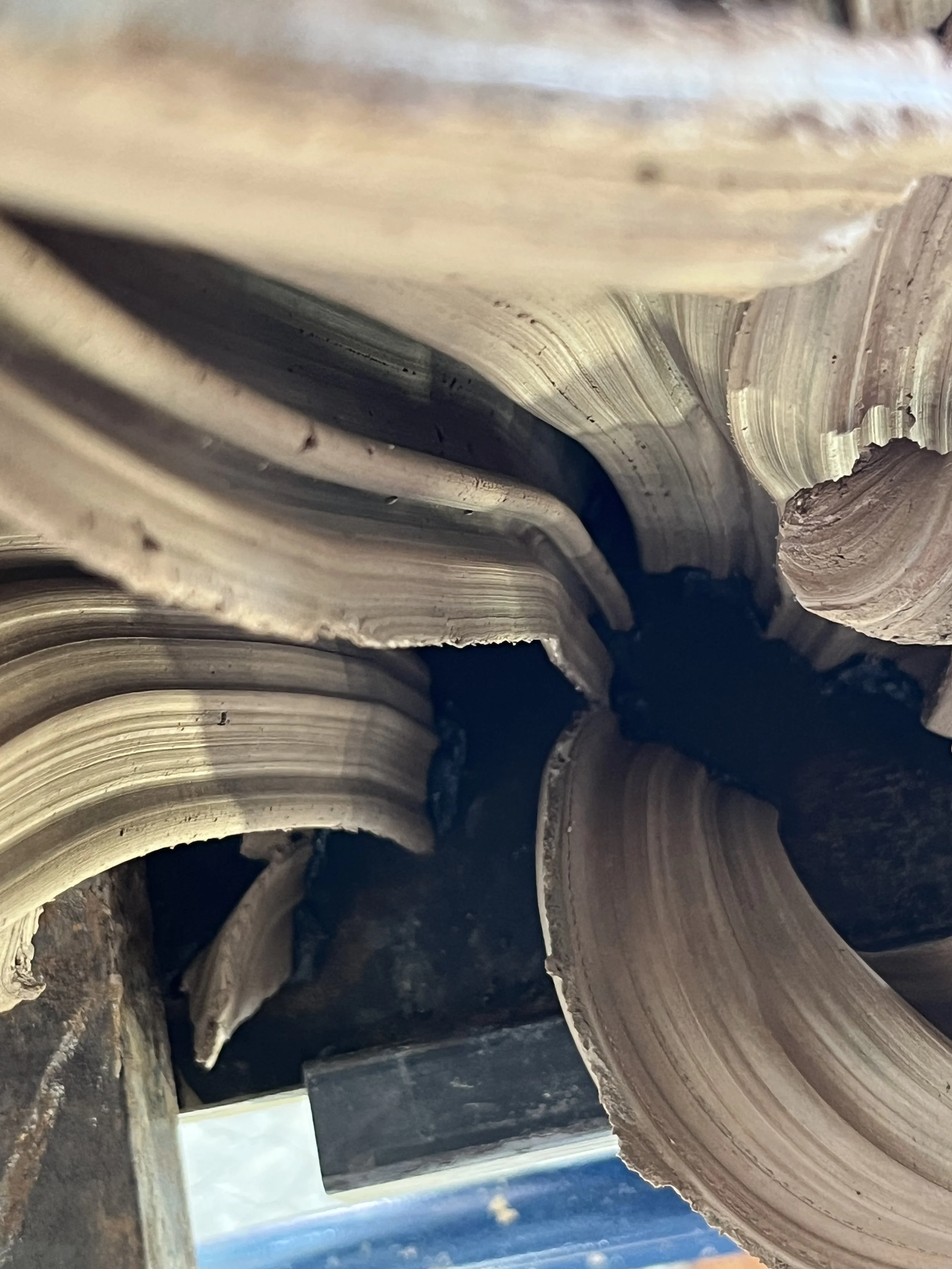
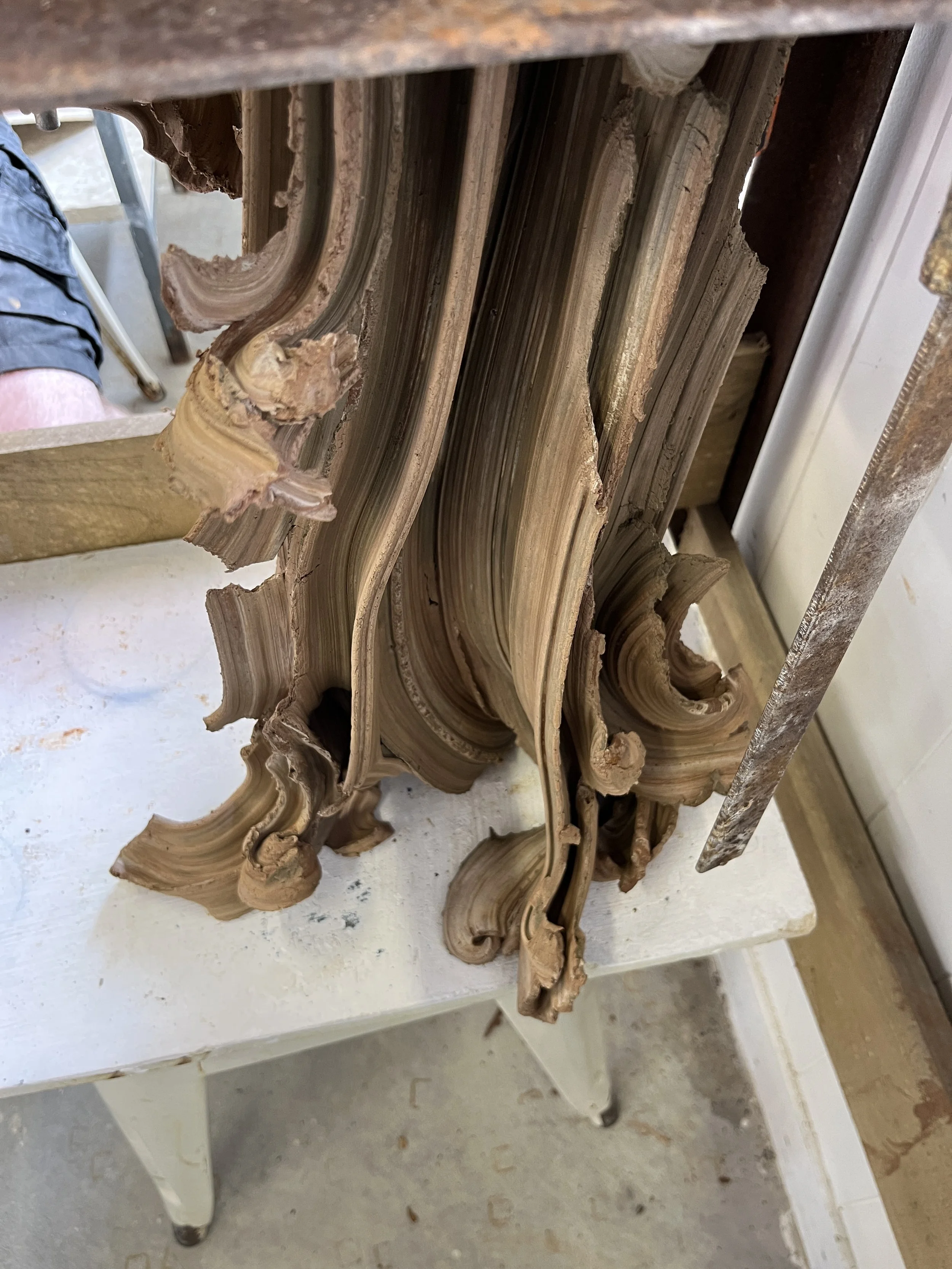
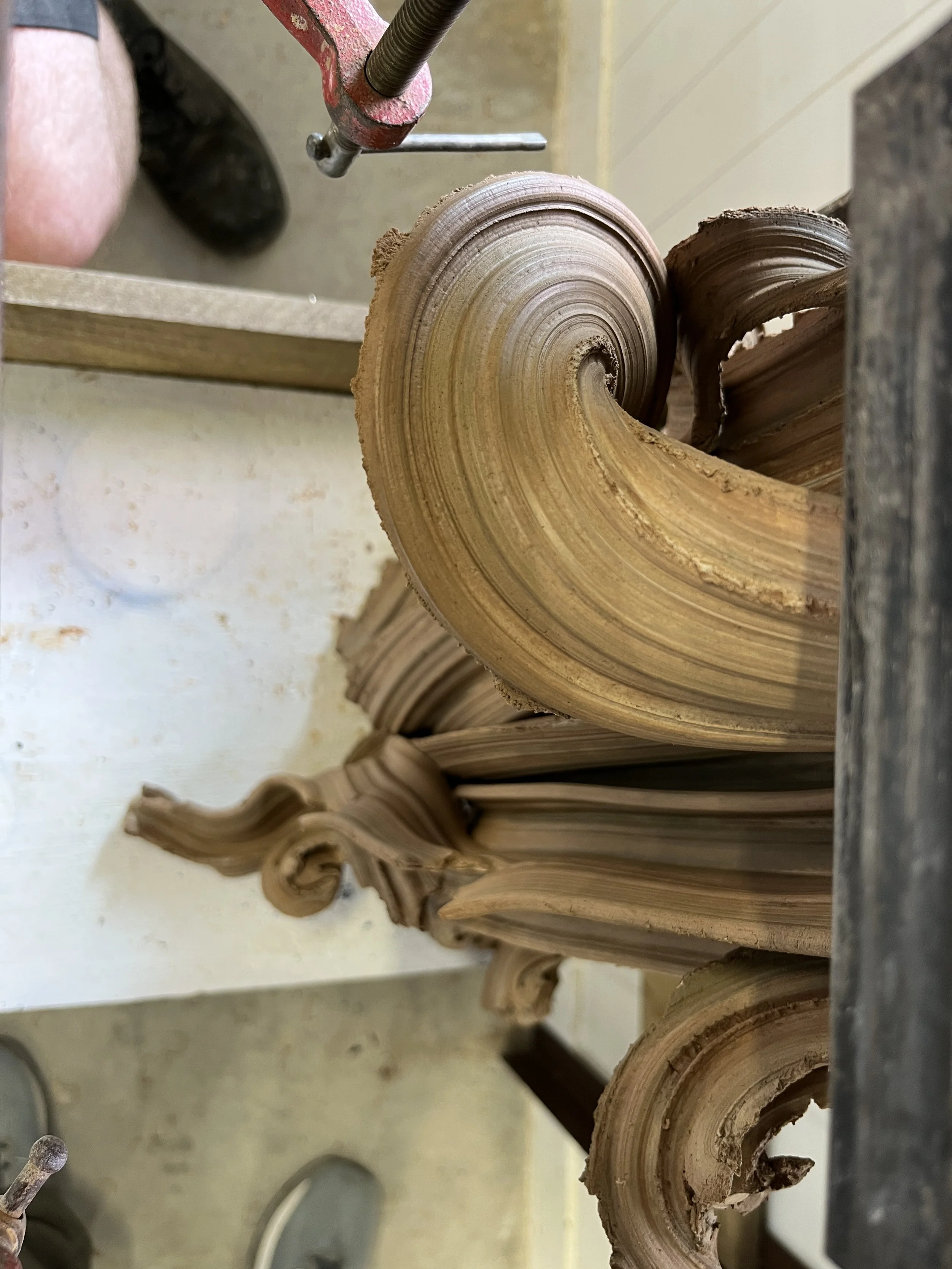
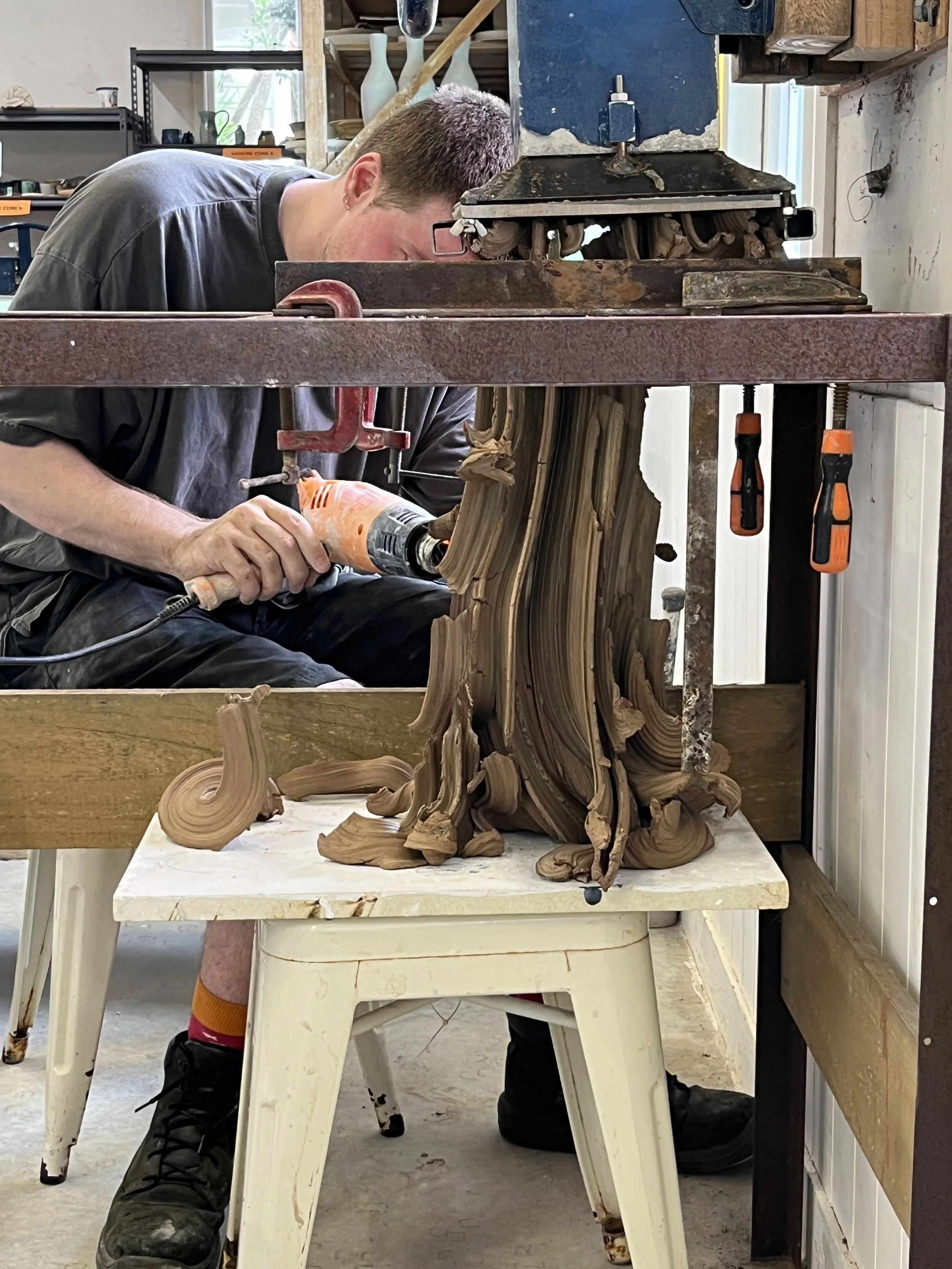
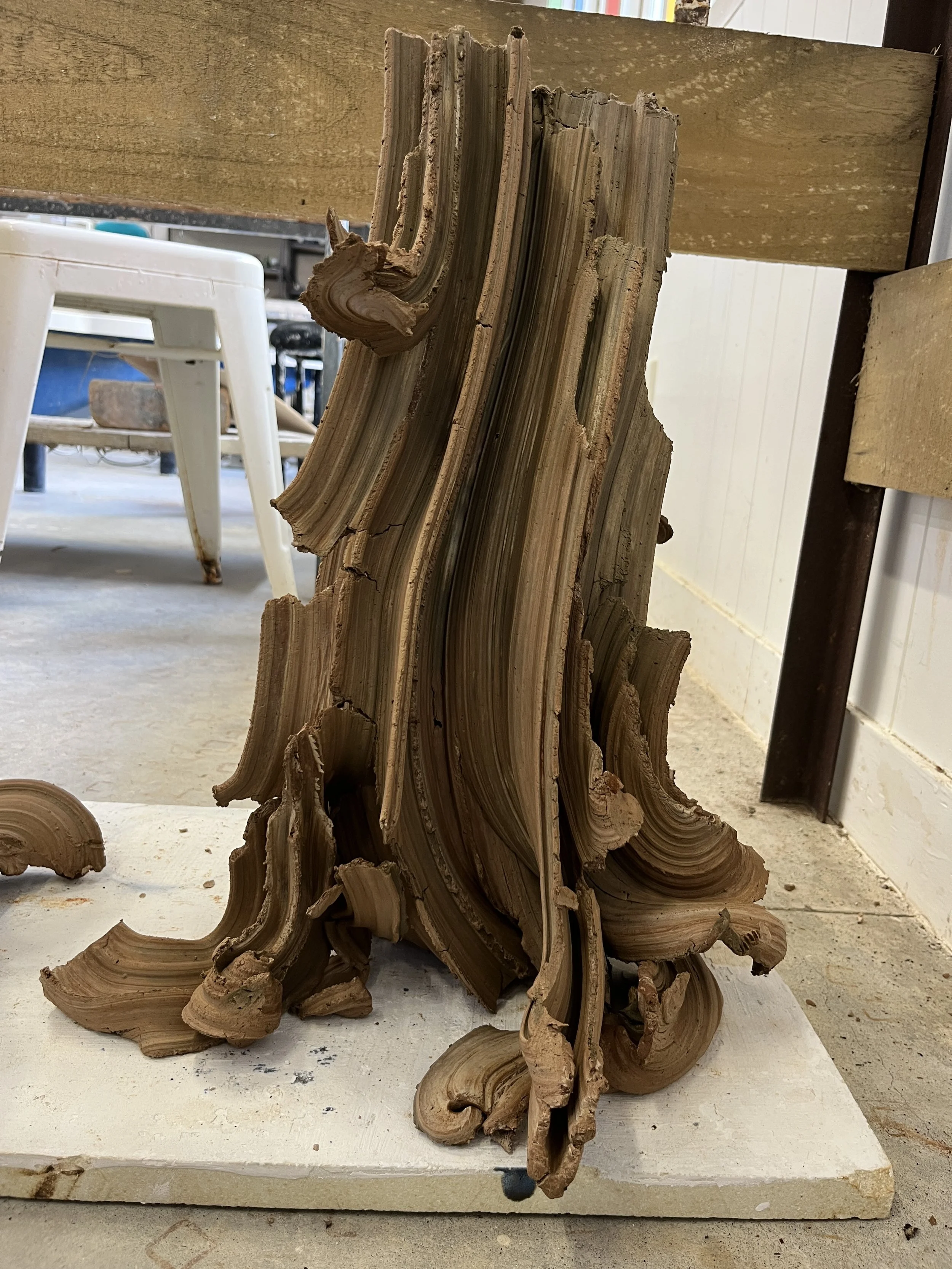
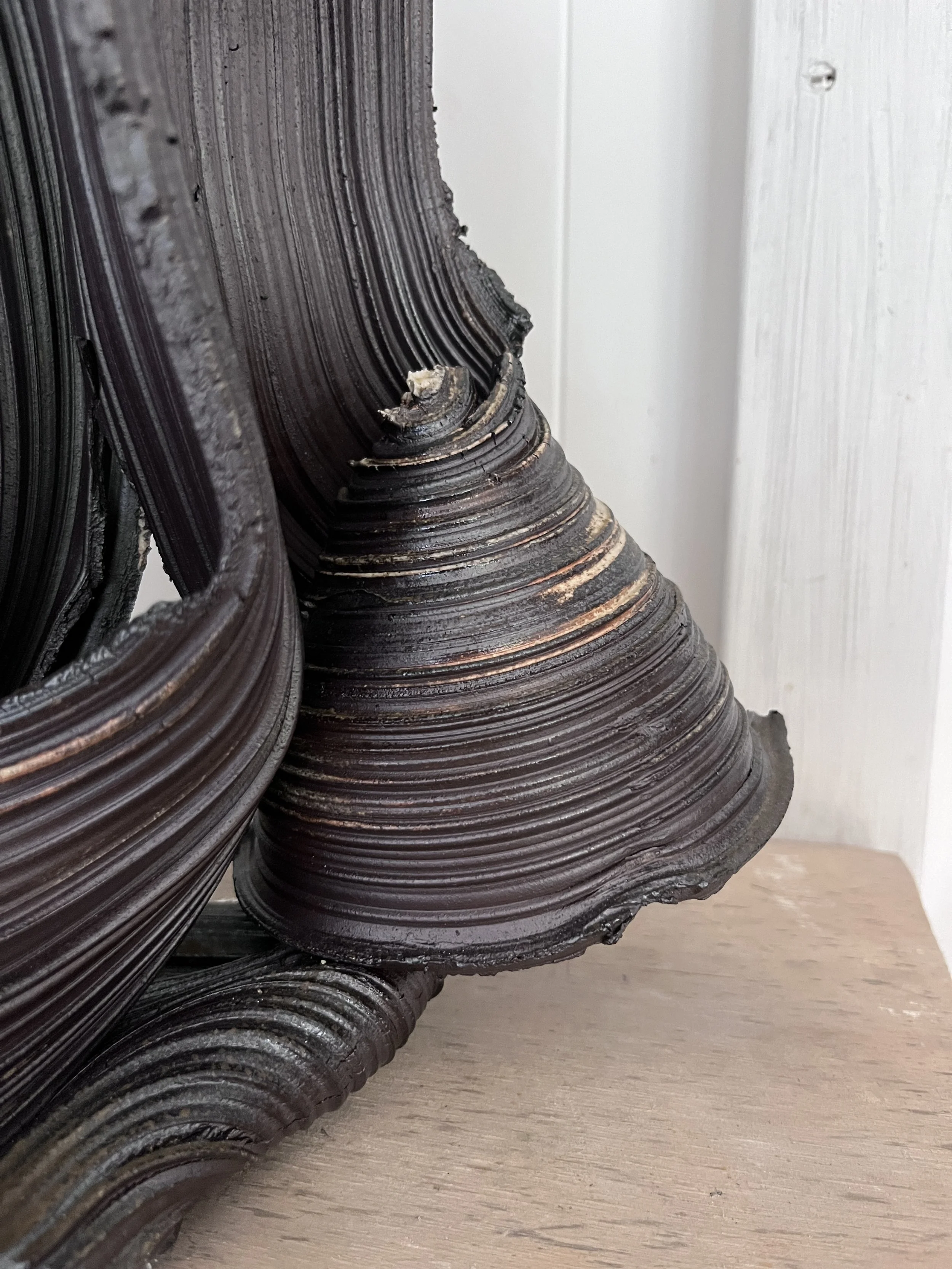
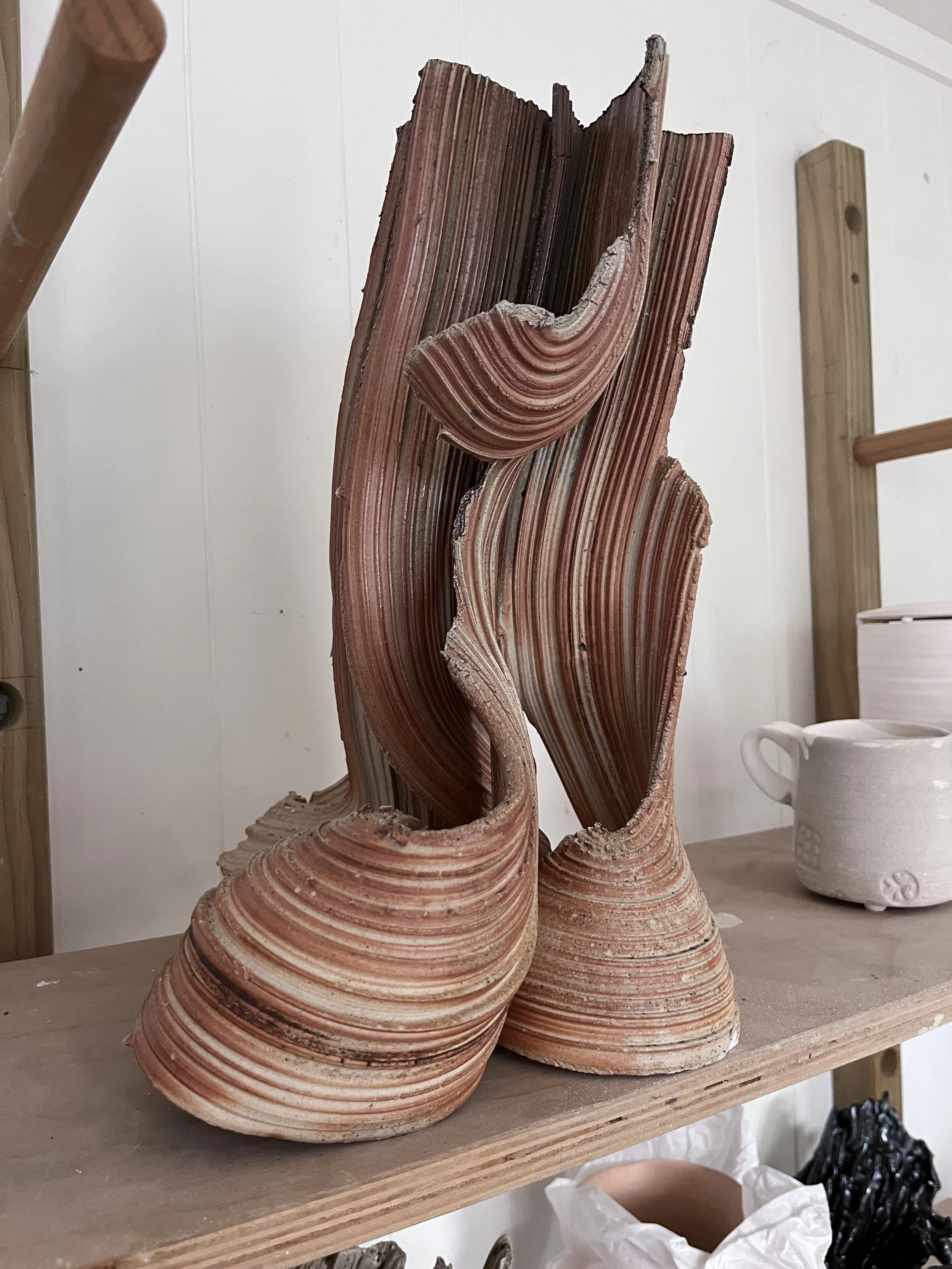
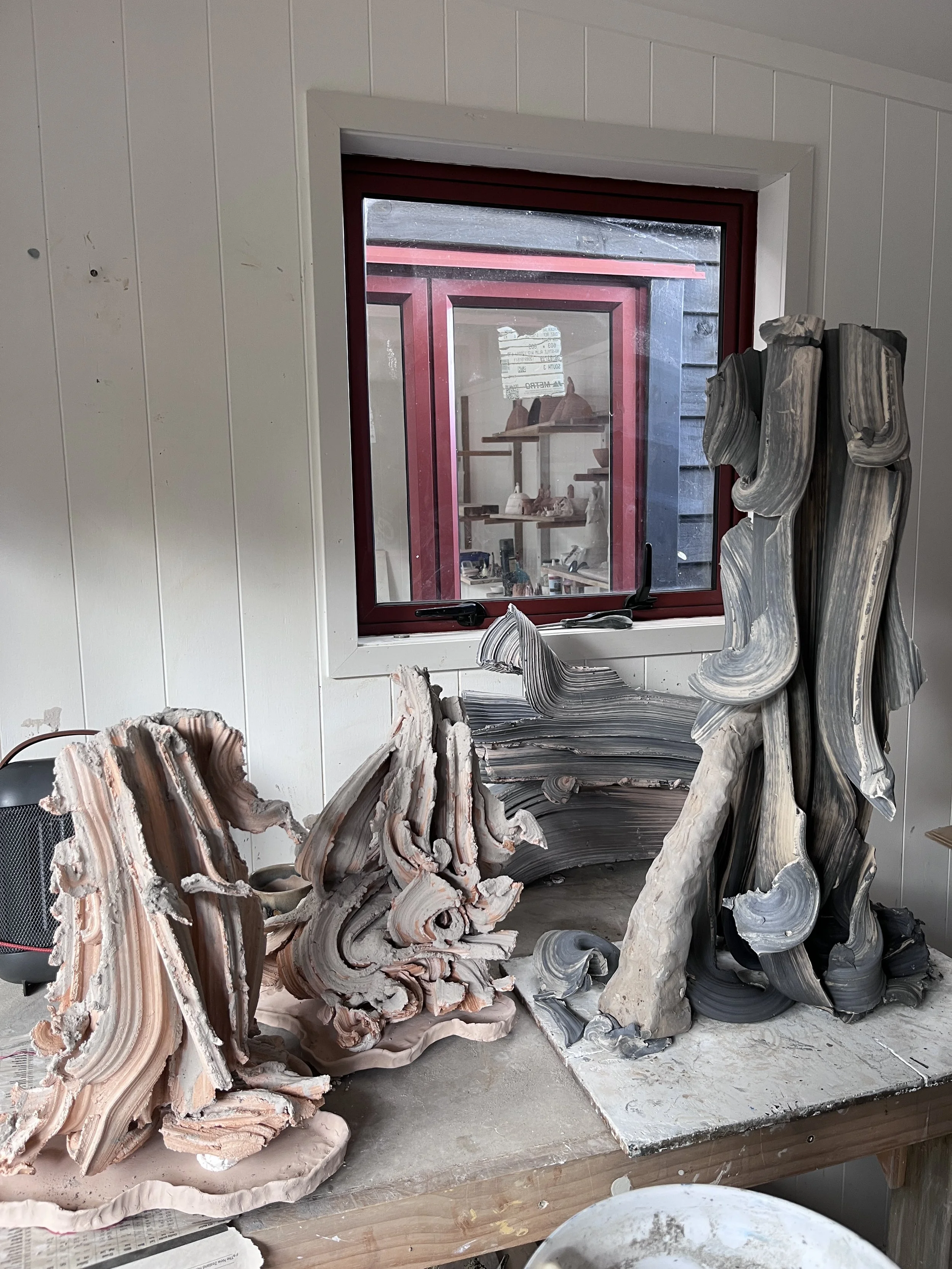
Peter Derksen's ceramic practice is built on a single, committed act. He cuts his own dies for an industrial extruder using a plasma cutter and then feeds reclaimed clay through them. What emerges is the work. He resists correcting, coaxing or propping up a form that wants to fall. If the piece comes out wrong, it goes back into the bucket. The clay will be used again. The gesture will not.
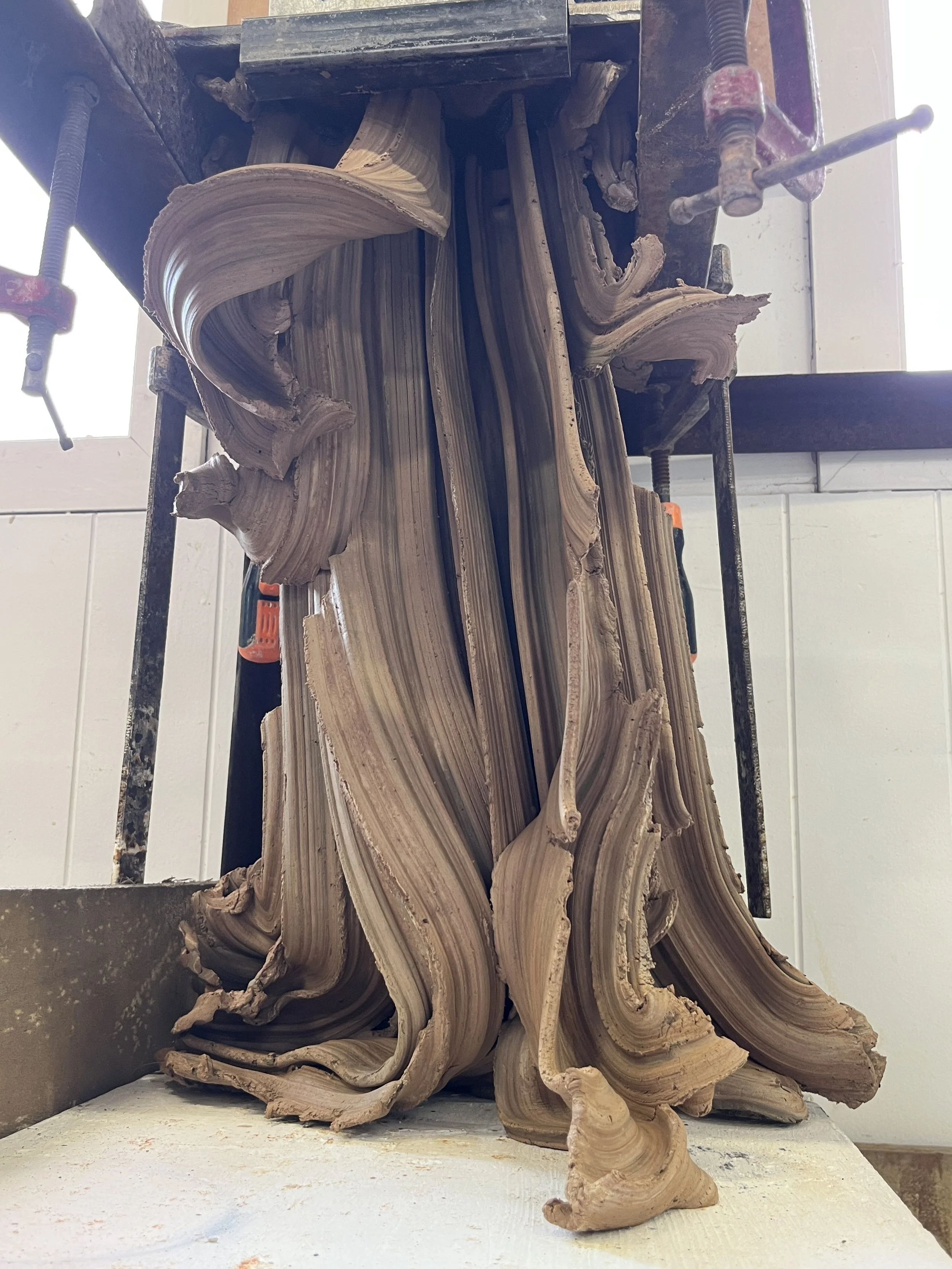
This singular commitment is where Derksen locates meaning. His forms are not assemblages, not built up through accretion or adjustment; they arrive whole, in one motion, from the mouth of the extruder. Authenticity, for him, lives in that irreversibility. The die is the drawing; the extrusion is the mark.
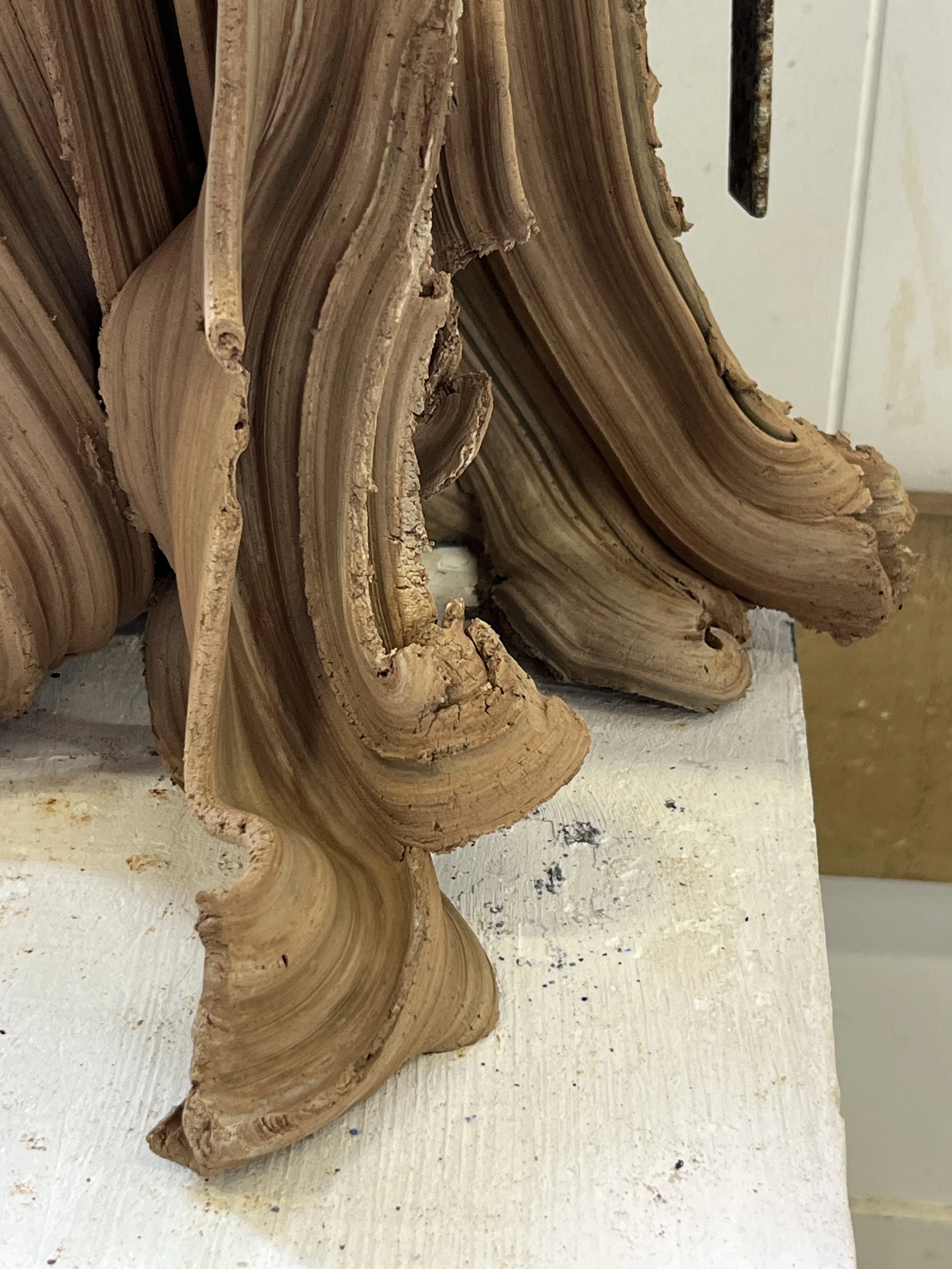
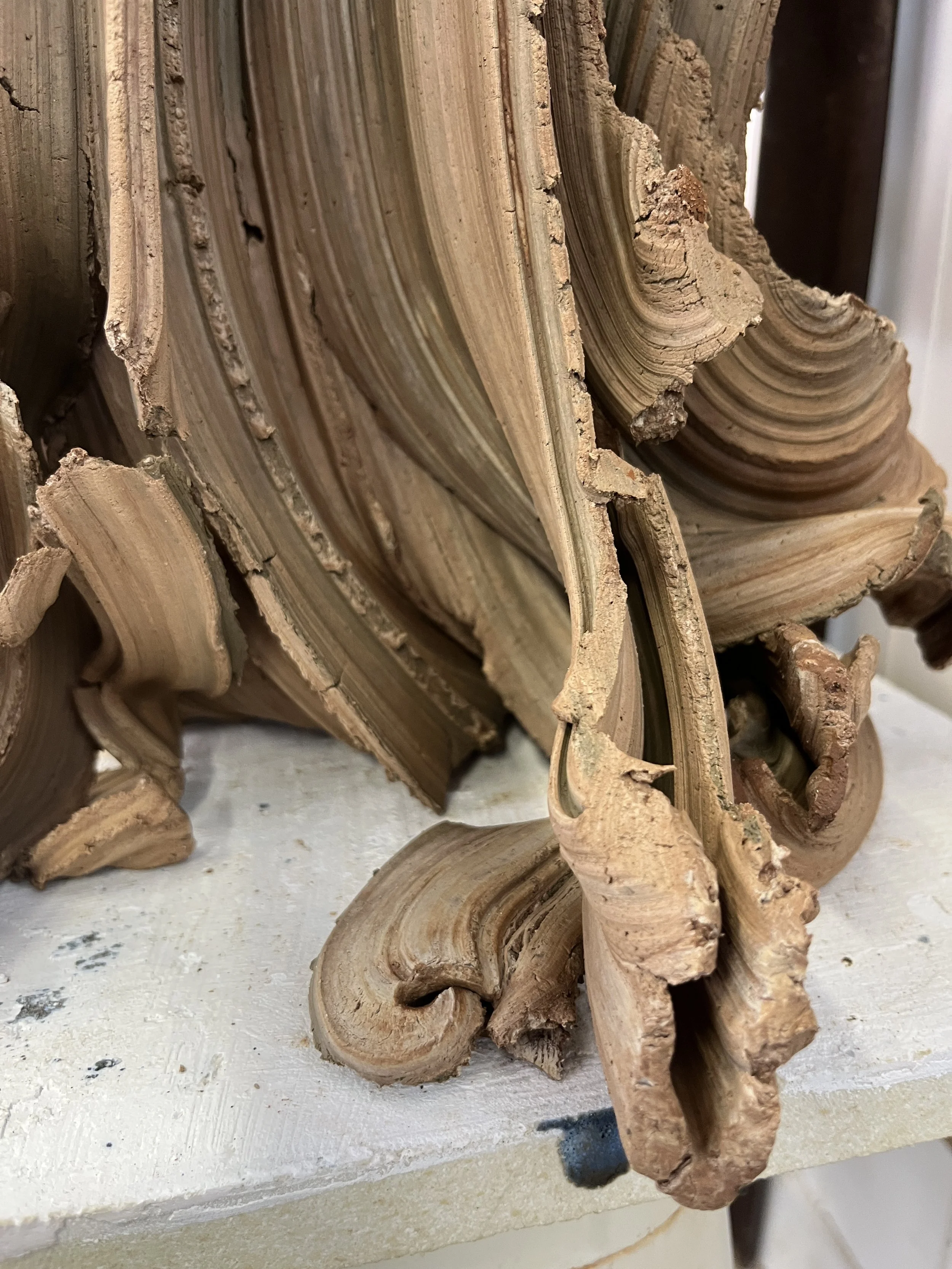
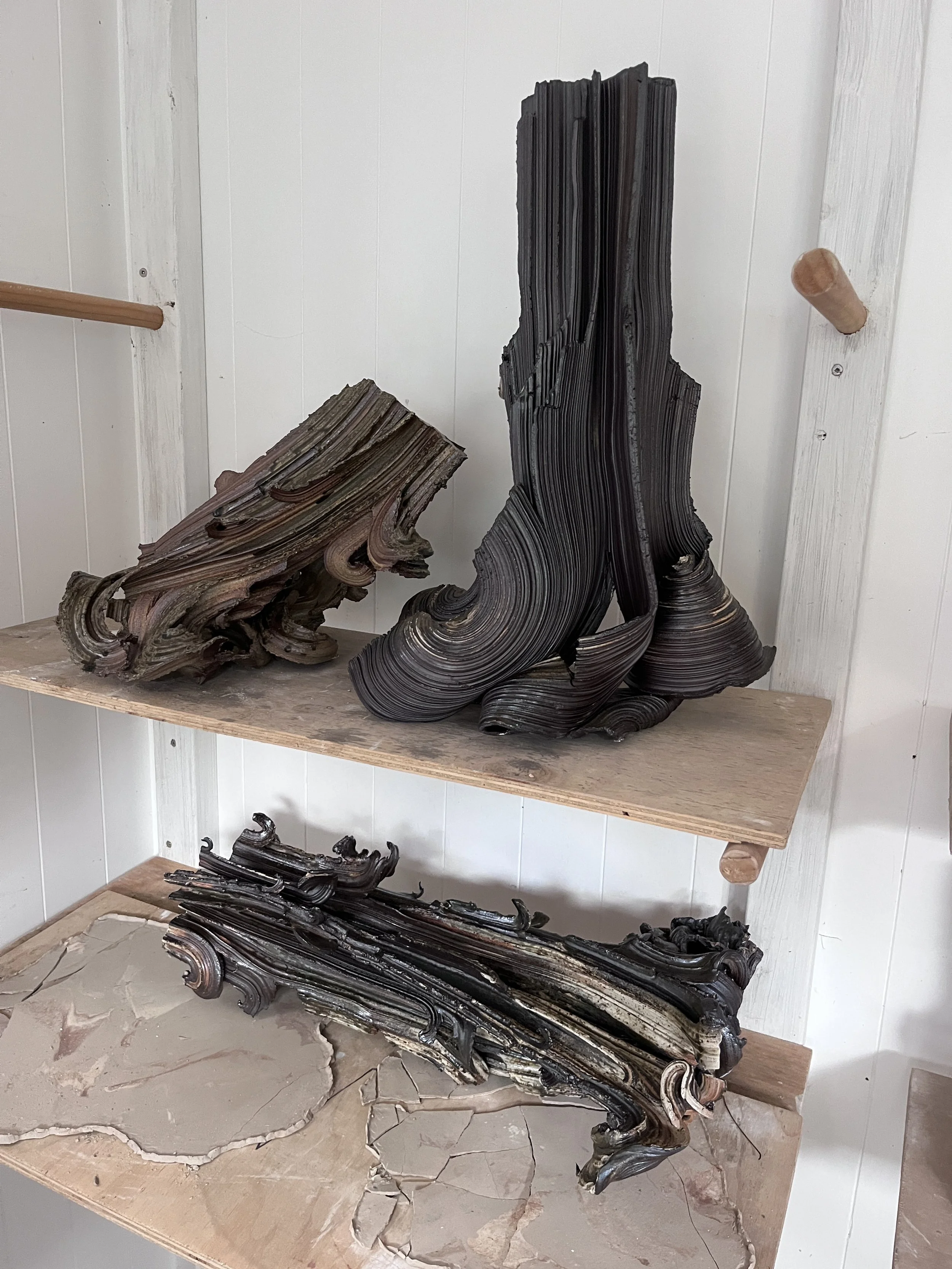
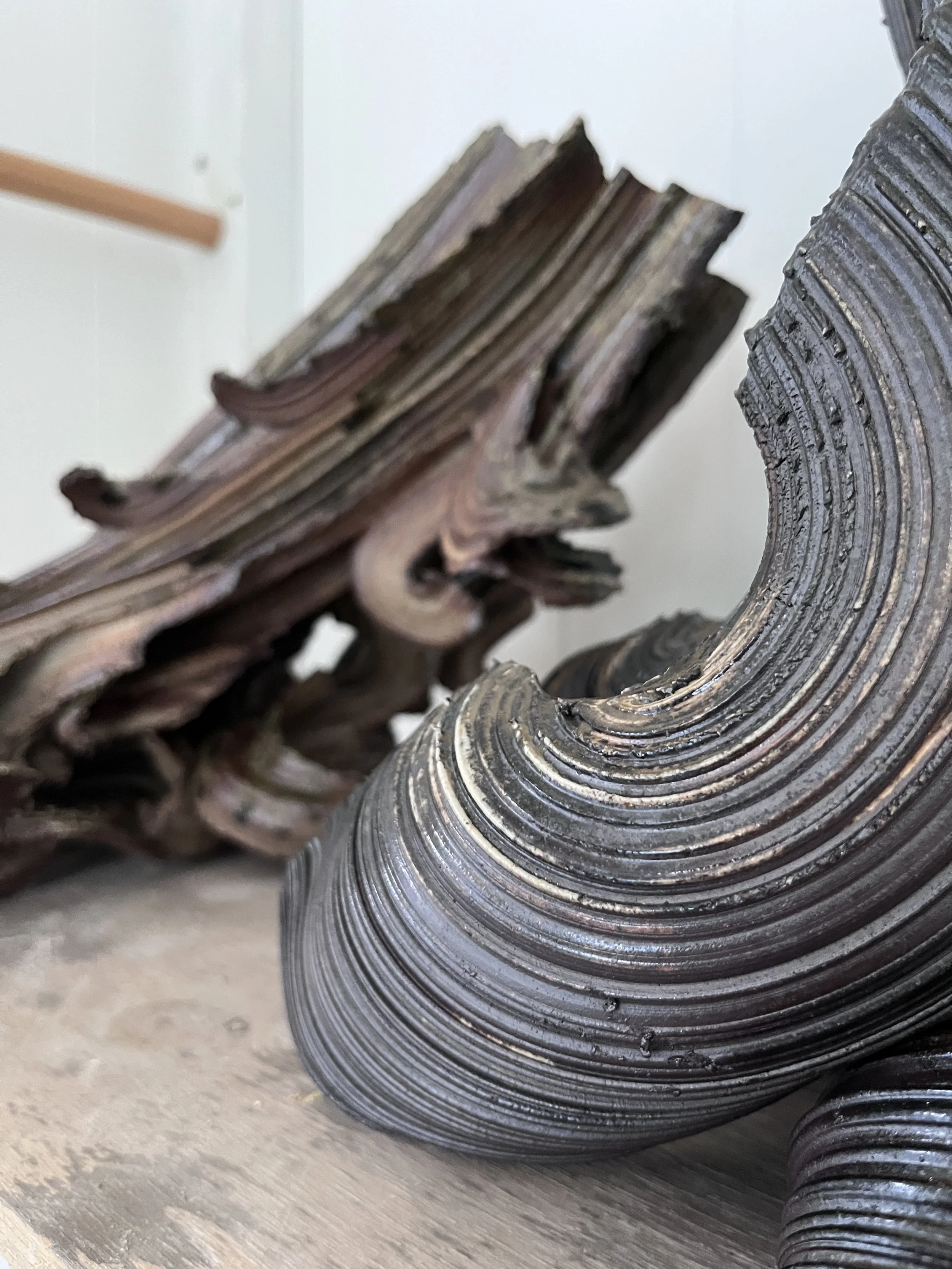
The plasma-cut edges of each die introduce distortion from the outset, the first roll of the dice in a game of control and risk. The wetness of the clay on any given day, the variable composition of the reclaimed body, the precise angle at which the coil falls - all of these act on the piece independently. Derksen sets the conditions; the process completes the form. The result hovers somewhere between a sequoia trunk and an industrial girder: heavily striated, upright, full of complexity and bearing the evidence of its own making. The tension between the die he fabricates and the form it refuses to predict is, in a sense, the subject of the work.
Wood firing deepens this logic. But before the kiln, there is already a negotiation underway between his bodily force transcribed through the extrusion mechanism, and the clay's own material resistance: its plasticity, its density, its internal memory. These are not incidental variables but active forces in the outcome. The kiln then introduces yet another agent: flame, ash, and time, further distancing the finished surface from any single authorial hand. What lands in the firing is never quite what was loaded.